
Last updated November 25, 2026
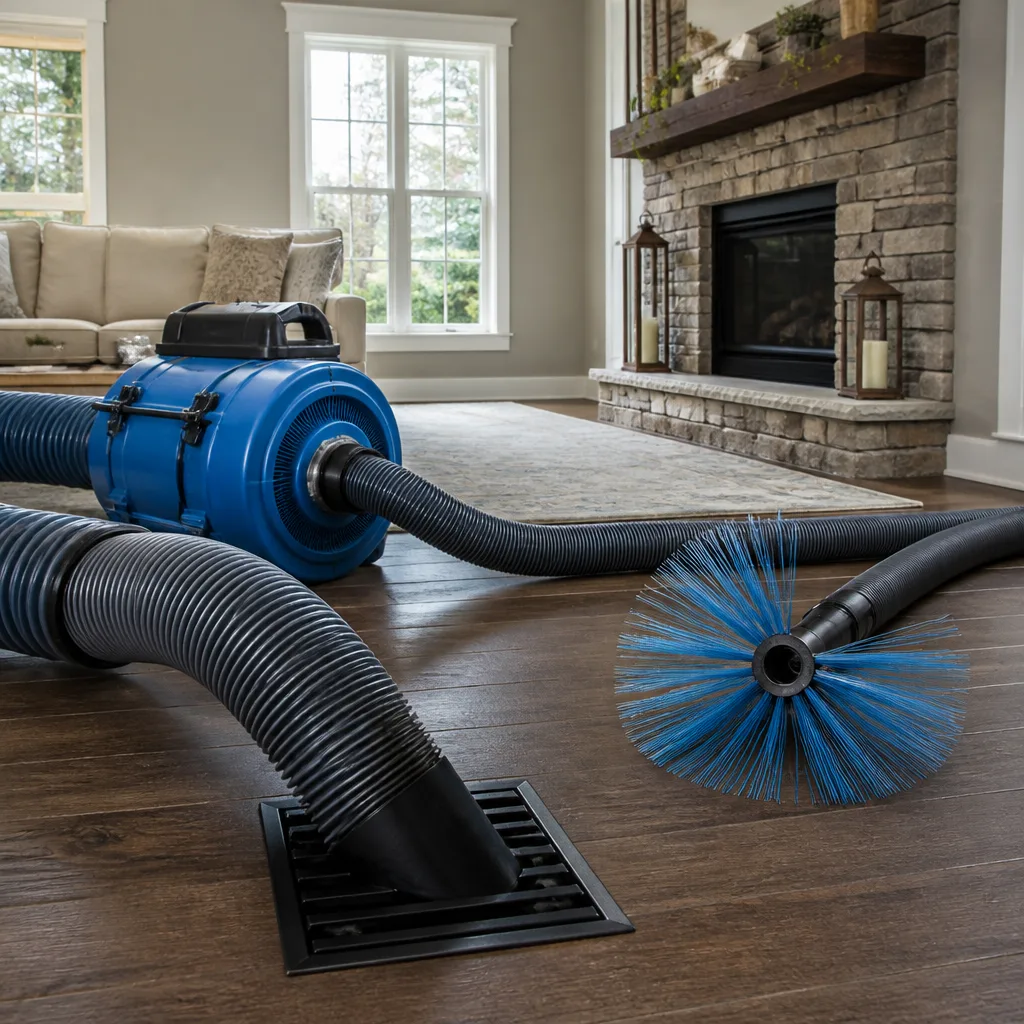 Whole-home duct cleaning
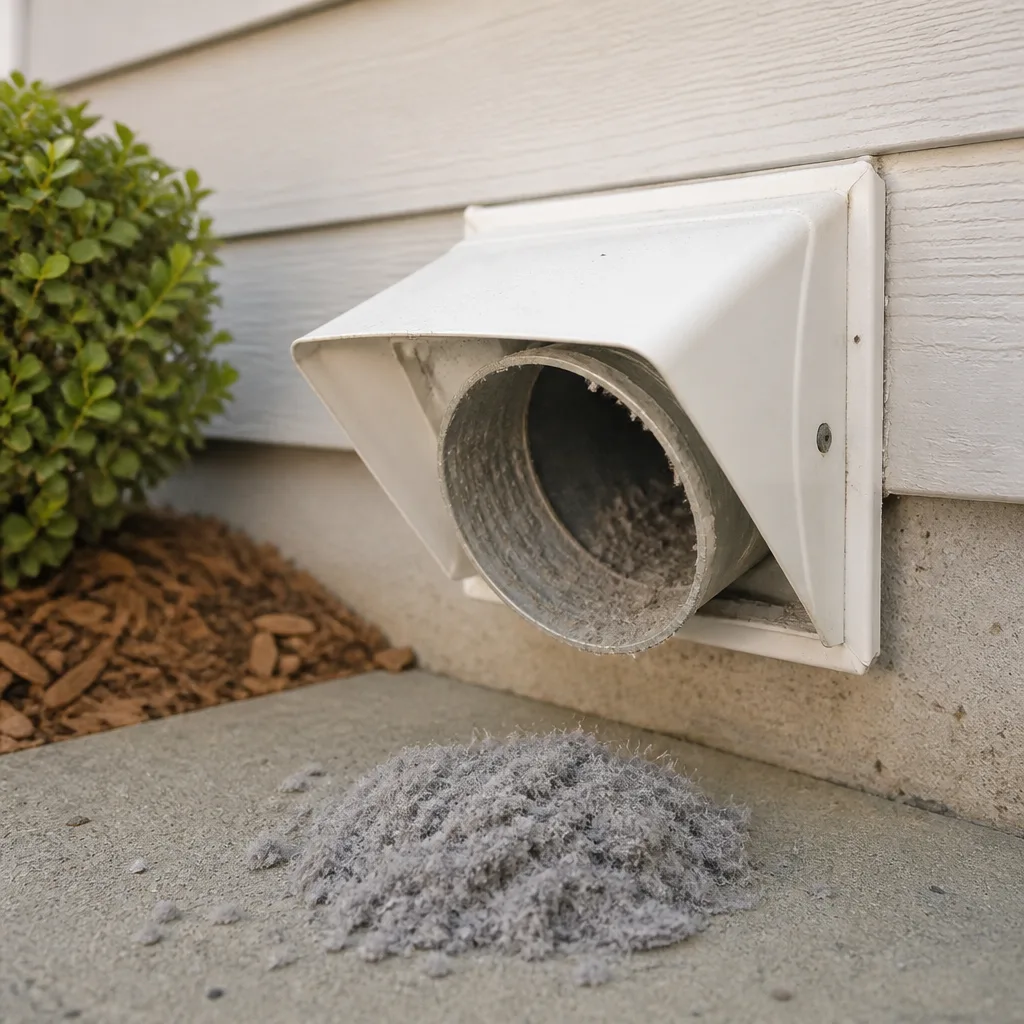 Dryer vent cleaning
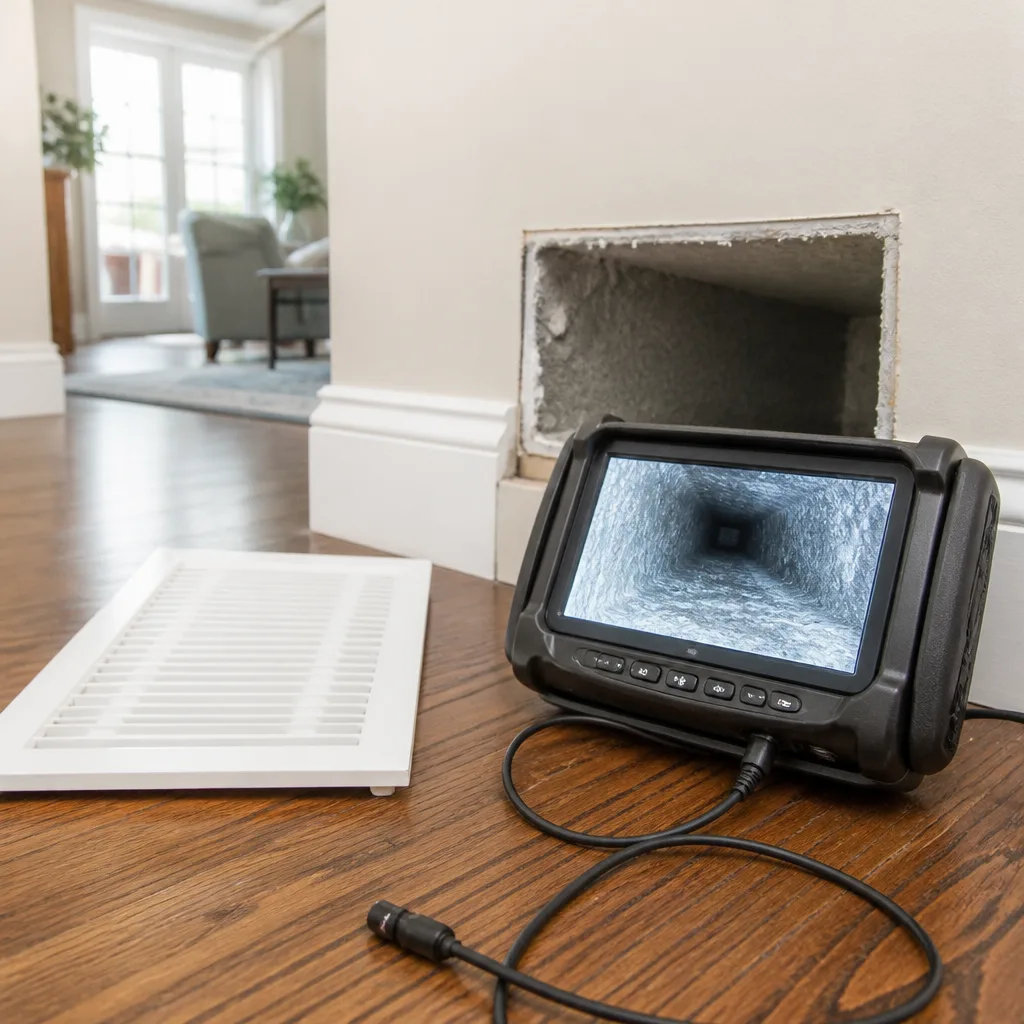 Camera inspection
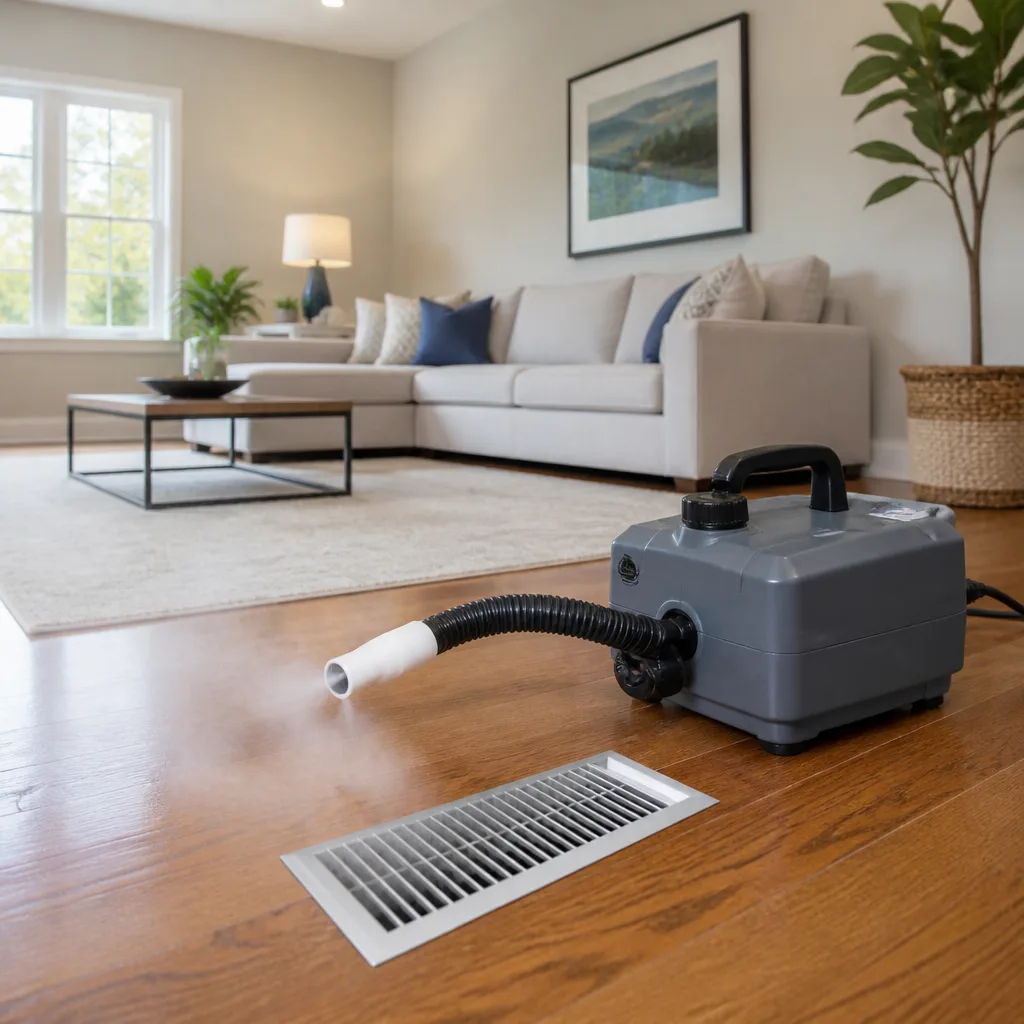 Sanitizing & deodorizing
Whole-system duct and dryer vent check with before-and-after photos - you see exactly what came out of your vents
That "$99 whole-house special" is a bait ad - the real number appears once they are in your hallway, or the "clean" is a shop-vac at the register. We photograph the inside of your ducts before and after instead.
The Complete Guide to Air Duct Cleaning in Lake Stevens
Most duct cleaning visits in the U.S. finish in under an hour. The industry’s own technical standard assumes a proper cleaning of an average home takes three to five. That difference is where air quality problems quietly survive a “cleaning” that never really happened – debris left behind, seals never checked, the blower and plenum untouched. If you’ve ever watched a crew run a hose around for forty minutes and hand you a bill, you already know the feeling. In this guide we break down what a thorough job actually involves at each stage, how Lake Stevens’ wet climate changes the calculus inside your ductwork, and how to tell the difference between a real cleaning and a rushed one.
Quick Answer
Air duct cleaning in Lake Stevens is a multi-stage process that follows the NADCA ACR standard: source removal of debris with rotary brush and negative-air containment, mechanical cleaning of the entire air pathway from return vents to supply registers, and post-cleaning verification. A proper whole-home job takes three to five hours depending on system size, layout, and how much debris has accumulated. Contact vacuuming alone does not clear a system; source removal does. Understanding which method a contractor uses tells you most of what you need to know before you book.
Styles & brands we work with
- Whole-home duct cleaning
- Dryer vent cleaning
- Camera inspection
- Sanitizing & deodorizing
Table of Contents
- What the NADCA ACR Standard Actually Requires
- Source Removal vs. Contact Vacuum: The Method That Matters
- How Lake Stevens’ Wet Climate Affects Your Ductwork
- Home Age and Construction: What to Inspect First
- Duct Repair and Sealing: Why Cleaning Alone Isn’t Enough
- Dryer Vents, HVAC Coils, and the Full Air Pathway
- Post-Cleaning Verification: Camera Inspection vs. Verbal Assurance
- How Often Ducts Really Need Cleaning
What the NADCA ACR Standard Actually Requires
The NADCA ACR standard – formally the Assessment, Cleaning, and Restoration standard – is the recognized benchmark for duct cleaning in the U.S. Not every contractor follows it, and not every “cleaning” you encounter online is built on it. Here’s what it actually expects at each phase:
Assessment. Before any hose goes in, the technician inspects the system. That means opening access points, checking for visible debris, moisture, mold growth, pest activity, and disconnected or damaged sections. A technician who skips this phase and jumps straight to the vacuum is guessing at what the system needs.
Source removal. The standard calls for physically dislodging and removing debris from the source – the duct surfaces and components – not simply pulling air through the system. This is where rotary brush agitation and negative-air containment come in. Without agitation, the debris stays stuck to the walls.
Cleaning of accessible system components. The ACR standard covers the entire pathway the conditioned air travels: return ducts, supply ducts, the plenum, the blower, the drain pan, and registers. It’s not just the visible runs you can see in a hallway closet.
Verification. After cleaning, the technician verifies the result. Camera inspection of the ducts or a visual check at multiple points is standard practice. A verbal “we got it all” is not the same thing.
Restoration (if needed). Any access holes cut for cleaning must be properly sealed. Dislodged insulation must be resecured. Sections that were compromised during cleaning need restoring.
In our experience, this standard is also the most useful benchmark for homeowners to hold contractors to. If a crew can’t explain what their assessment, source removal, and verification steps involve, that gap is a signal. In a wet climate like Lake Stevens’, where moisture and microbial growth are real considerations, following the standard phases matters even more than in drier regions.
Source Removal vs. Contact Vacuum: The Method That Matters
Two cleaning methods dominate the trade: source removal and contact vacuuming. They are not equivalent, and the difference decides whether your system actually gets clean.
Contact vacuuming means running a vacuum head along the inside surfaces of accessible duct runs. The suction pulls up loose debris near the head. What it doesn’t do is dislodge debris that’s bonded to the duct walls – dust films, adhered lint, microbial growth, construction dust that’s baked into the metal over years. Contact vacuuming is a surface touch, not a full system clean.
Source removal uses mechanical agitation – typically a rotary brush system – to break the bond between debris and the duct surface, while professional-grade negative-air equipment holds the dust in containment, preventing it from recirculating into the home. The brush physically loosens; the negative air captures. That combination is what actually clears a system.
The equipment matters. Consumer-grade shop vacs and small portable units aren’t built to handle the airflow volume or the containment pressure a proper source removal job requires. Lake Stevens Air Duct Cleaning uses Rotobrush rotary brush systems for the agitation side and Nikro negative-air equipment for containment, the same class of professional-grade gear used by remediation contractors. Abatement Technologies filtration is part of the containment picture as well, so dislodged contaminants don’t drift back into living space during the process.
This is also why a legitimate whole-home cleaning takes hours, not minutes. Source removal at every branch, every register, and every return is a physical job. Any contractor promising a full system clean in under an hour is doing contact vacuuming at best.
How Lake Stevens’ Wet Climate Affects Your Ductwork
Lake Stevens sits in the western Washington lowlands, and that has real consequences for what’s happening inside your ducts. The region’s wet, humid months mean your home’s indoor humidity runs higher than in drier inland regions for a substantial part of the year. That moisture profile changes the microbiology of duct interiors.
Specifically, higher ambient humidity accelerates microbial growth on surfaces that collect dust and organic debris. Duct interiors are dark, generally cool, and rarely inspected. That combination is exactly where mold spores and bacteria find a foothold when moisture is present. A drier climate slows this down; Lake Stevens’ humidity doesn’t.
What that means practically:
- Dust films on duct walls are more likely to bloom into microbial growth before you notice a smell.
- Musty or “basement-like” odors in a ducted home are a stronger signal here than in a dry climate.
- Condensation on metal ductwork and around the air handler is a common moisture source that feeds growth.
- Homes with crawl spaces in Lake Stevens are especially vulnerable to humidity rising through the structure and into the duct runs.
This is also why cleaning alone isn’t always the full answer. If the moisture source is unaddressed – a disconnected return that’s pulling crawl-space air, a humid crawl without vapor control, a condensate drain that isn’t draining – ducts can re-contaminate within a season. Air quality and sanitizing as a distinct service exists exactly for this reason: it addresses biological contaminants (mold spores, bacteria, allergens) that debris removal doesn’t neutralize. Paired with duct repair and sealing later, it addresses the structural reason air quality degrades, not just the symptom.
We don’t promise a specific result in every home, but we can promise the assessment will tell you whether moisture, growth, or structural issues are actually present. Call (855) 726-7819 to schedule a free estimate. We answer 24/7. Fast dispatch from 7am to 7pm, Sunday through Friday.
Home Age and Construction: What to Inspect First
No two duct systems in Lake Stevens present the same starting conditions. Home age and construction type set the inspection priorities, and understanding them is half of knowing what a cleaning will actually uncover.
Crawl Space Homes
Older homes on crawl foundations often run ductwork through unconditioned crawl spaces. That’s the highest-risk configuration in Lake Stevens’ climate: a humid crawl, warm duct surfaces in winter, and any leak in the duct jacket becomes a moisture entry point. Return duct leaks in a crawl can pull soil gas, insulation fibers, and moist crawl air directly into the living space. If a crawl-space home hasn’t had the ducts inspected in years, that inspection typically finds disconnected runs, deteriorated flex duct insulation, or pest entry long before the cleaning starts.
Slab Homes
Slab construction is more common in newer Lake Stevens neighborhoods. The ducts here tend to run under the slab or through the attic, which changes the inspection. Slab ducts are hard to access, so camera inspection is essential – you can’t see what’s going on by looking at the register. Attic runs are exposed to temperature swings and can sag or disconnect where they’re strapped.
Basement Homes
Homes with basements present their own profile. Ductwork often runs through ceiling chases and along conditioned basement walls. The basement itself brings moisture risk – groundwater seepage, humidity – and duct runs near the foundation are where any leak coincides with the moisture source. In our experience, basement homes with visible condensation on the ducts or a persistent musty smell in the lower level often benefit from both cleaning and an honest conversation about humidity control.
Age adds another layer. Homes built decades ago may have metal ductwork with failing seam tape or worn interior insulation; newer homes may have flex duct runs that have been kinked during installation. Neither is a reason to panic, but both matter when sizing the job and setting expectations. The estimate should reflect what the technician actually finds, not what the online price sheet assumed.
Duct Repair and Sealing: Why Cleaning Alone Isn’t Enough
Clean ducts are only part of the picture. Sealed, intact ducts keep them that way. This is the piece most duct cleaning companies skip, and it’s the single biggest reason a cleaning sometimes doesn’t hold.
When ducts leak – at disconnected flex runs, at failed seam tape, at rusted metal joints, at holes cut for older access – the system pulls air from wherever the pressure differential leads. In a Lake Stevens home, that often means humid crawl-space air, attic air, or dust loaded from a nearby interstitial cavity. Cleaning the ducts without addressing those leaks is like mopping a floor with the faucet running.
Duct repair and sealing is a service most duct cleaners don’t provide. The work involves:
- Inspecting the system with a camera and physically at access points to locate leaks, disconnected runs, and failed joints.
- Resealing joints with proper mastic and duct-appropriate tape rather than consumer-grade material.
- Reconnecting and re-strapping flex runs that have sagged or separated.
- Replacing deteriorated sections where repair isn’t reliable.
- Sealing access holes cut during cleaning so the system is tighter than when work started.
We include the whole air pathway in the assessment for exactly this reason. If the inspection reveals leaks, the estimate will include the repair. If it doesn’t, the cleaning stays a cleaning. What we won’t do is clean a leaky system, then leave the leaks for you to find later.
Dryer Vents, HVAC Coils, and the Full Air Pathway
The duct run isn’t the only pathway worth attention. Two adjacent systems move air and debris in most Lake Stevens homes, and they’re often overlooked.
The dryer vent. Every load of laundry pushes lint through the vent. Lint builds up on the interior walls of the vent run, especially at elbows and where the vent transitions through the wall or roof. A restricted dryer vent forces the dryer to run longer, which increases heat and wear on the appliance. In homes where the dryer vent hasn’t been cleared in years, the restriction is often significant. Dryer vent cleaning is one of the five services we provide for this reason – it’s not a side offering, it’s part of the air pathway in the home. A professional dryer vent clearing uses rod-and-brush equipment similar in principle to duct cleaning and includes a post-cleaning check of airflow.
The HVAC system itself. The blower wheel, the evaporator coil, and the drain pan are where dust collects immediately downstream of the return. A clean duct system feeding a dusty coil is only half clean. HVAC cleaning removes the accumulated dust from these components so the whole system moves clean air. Coil cleaning also matters for system efficiency – a fouled coil has to work harder to deliver the same cooling. If you’re scheduling air duct cleaning in your Lake Stevens home, ask whether the coil and blower are included. If they aren’t, the system is only partly clean. Learn more about our HVAC cleaning service and how it complements the duct work.
We layer in air quality products from Honeywell and Aprilaire where the assessment calls for them – filtration upgrades, humidity control, and components that work with the duct system rather than against it. These come after cleaning, not instead of it. Cleaning first removes what’s there; the products help keep it that way.
Post-Cleaning Verification: Camera Inspection vs. Verbal Assurance
This is the simplest test of a real job versus a rushed one: how does the contractor verify the work? A verbal assurance that everything’s clean is not a verification step. A camera inspection at multiple points in the system is.
Here’s what camera-verified cleaning looks like in practice:
- The technician runs a camera through accessible duct runs after cleaning, typically through the main trunk and into at least a sample of branch runs.
- Before-and-after footage shows the duct interior at the same points, so you can see what was there and what was removed.
- The camera confirms no residual debris films, no disconnected sections that were missed, and no visible microbial growth where it was found during assessment.
- Any areas that weren’t fully cleared during the first pass get a second pass before the job closes.
Before-and-after photo documentation is one way to know what actually happened inside your system. Ask the contractor before booking whether they provide it. The best practice is for the technician to show you the footage or photos during the walkthrough, not hand you a folder.
The verification step also feeds the estimate. If the camera reveals an unexpected issue – a disconnected joint, an area of damage, a moisture problem that wasn’t apparent during the initial assessment – that belongs in the conversation before the invoice. The written estimate sets the final price, and any change to the scope means a new estimate, not a surprise charge.
How Often Ducts Really Need Cleaning
There’s no universal schedule. The honest answer is that most homes don’t need duct cleaning on a fixed interval – they need it when conditions call for it. Here’s how we think about frequency in Lake Stevens homes:
Homes with visible debris at the registers. When debris is shedding into rooms when the system runs, that’s an indication the ducts are loaded. Book an assessment.
Homes with pets or recent renovation. Pet dander and construction dust both accumulate faster than ordinary household dust. If the household has changed significantly – new pets, a remodel, a new build – the system usually needs attention.
Homes with musty odors or allergy complaints. Persistent musty smell, especially in bedrooms or lower levels, is a signal that microbial growth is present somewhere in the pathway. Cleaning and – if needed – sanitizing belongs on the table.
Homes with a recent HVAC replacement. When a system is replaced, the ductwork is often exposed to debris – and the new system deserves clean ducts. Bring cleaning in with the installation or shortly after.
Homes that have never had the ducts cleaned. If the system has never been serviced and the home is more than a few years old, an assessment is worth the call regardless of whether cleaning is booked on the day. The technician will tell you honestly what they see.
Dryer vents are a different timeline: lint accumulates with every load, and annual clearing is a reasonable starting point for a typical household. If your dryer is taking noticeably longer to dry, or the vent run is long with multiple elbows, that cadence should probably be tighter. Learn more about our dryer vent cleaning service and what a professional clearing involves.
Common Mistakes to Avoid
- Booking on price alone without asking about method. A low quote that turns out to be contact vacuuming for an hour looks cheaper than a proper cleaning, but the system is not clean and the problem returns. Ask specifically about source removal and negative-air containment before booking.
- Skipping the assessment phase. If a contractor quotes a price before inspecting the system, the price isn’t based on anything real. Lake Stevens homes vary widely – crawl space, slab, and basement systems present different needs – and an honest estimate reflects the actual layout.
- Assuming duct cleaning covers the dryer vent and HVAC. They are separate systems that share the same air-quality goal. If you’re concerned about the air in your home, ask about all three. A duct-only cleaning can miss both.
- Not asking for verification. Verbal assurance that the ducts are clean is not verification. Ask upfront whether camera inspection is included and whether you’ll see before-and-after documentation at the walkthrough.
- Ignoring musty odors after cleaning. A musty smell that persists after cleaning usually means moisture is still entering the system – a disconnected return, a humid crawl, or a condensation issue. Cleaning alone won’t fix it. Have the moisture source assessed before booking anything else.
- Skipping the repair step when leaks are found. Cleaning without sealing leaves the system re-contaminated in short order. If the assessment finds leaks, address them.
- Choosing a contractor who won’t put scope in writing. The written estimate – line by line – is the protection. Anything sold verbally on the day, with numbers that shift once work starts, is a signal to pause.
See the difference
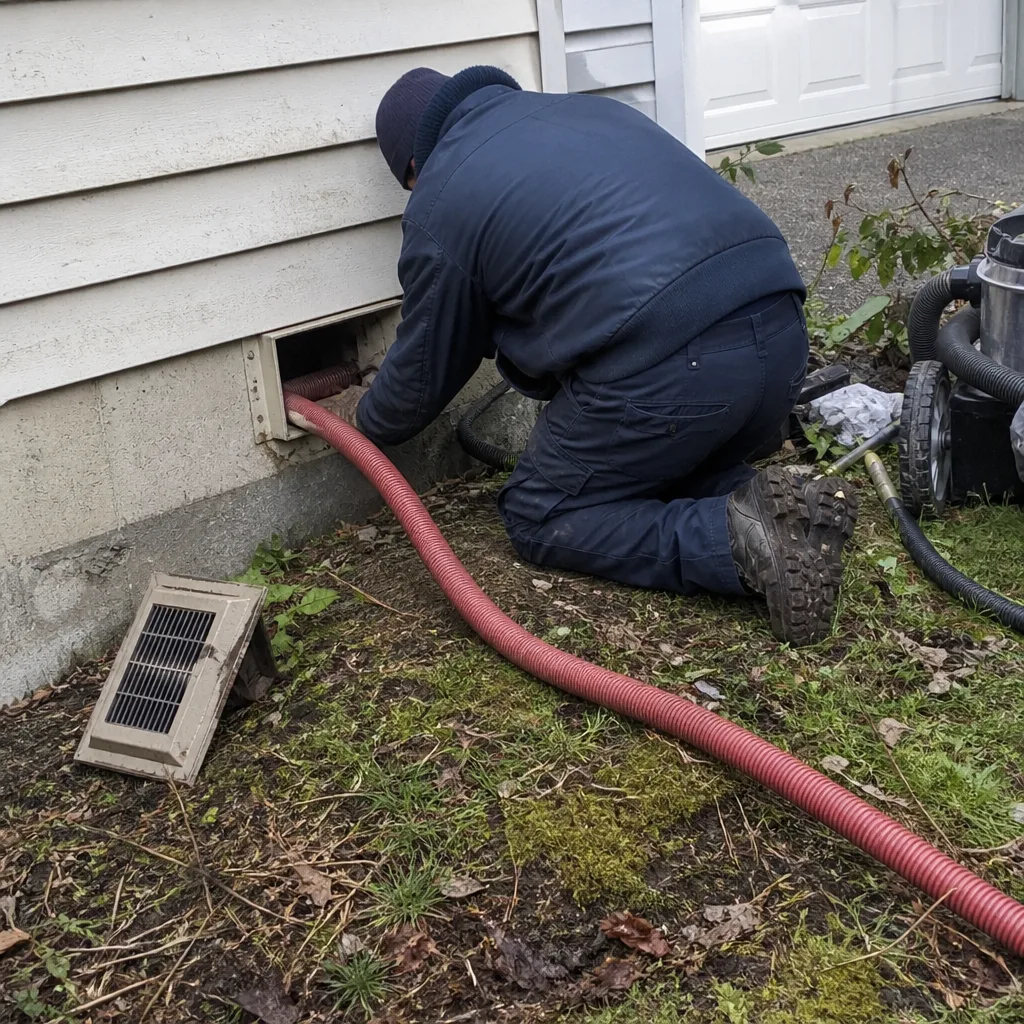 Before
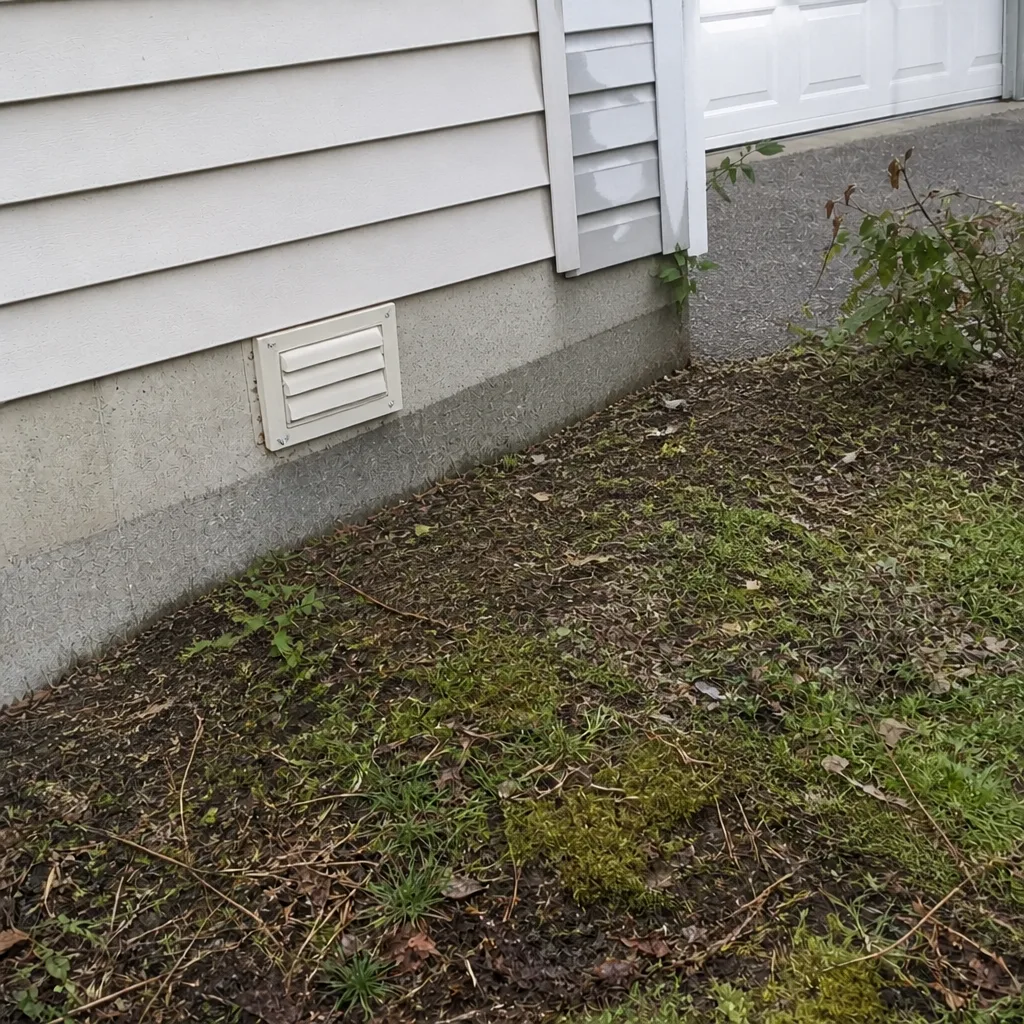 After
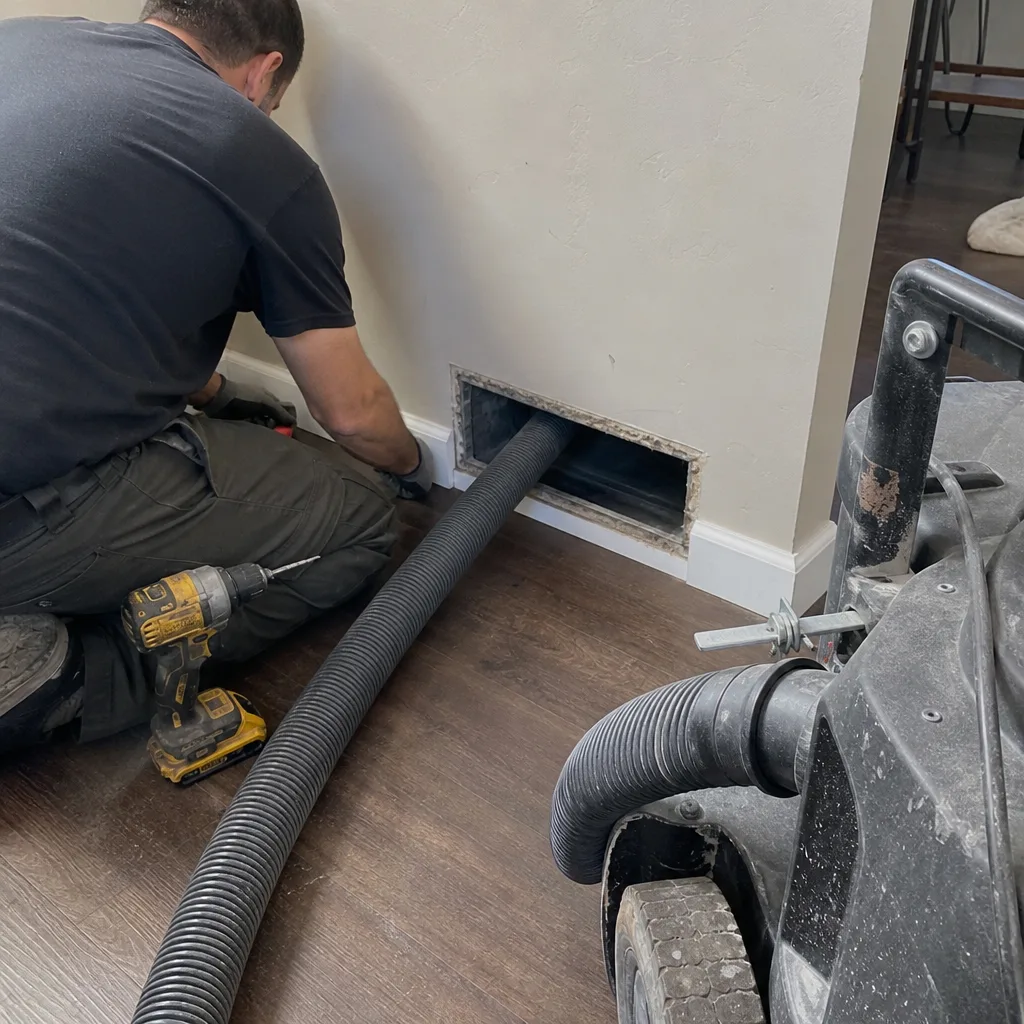 Before
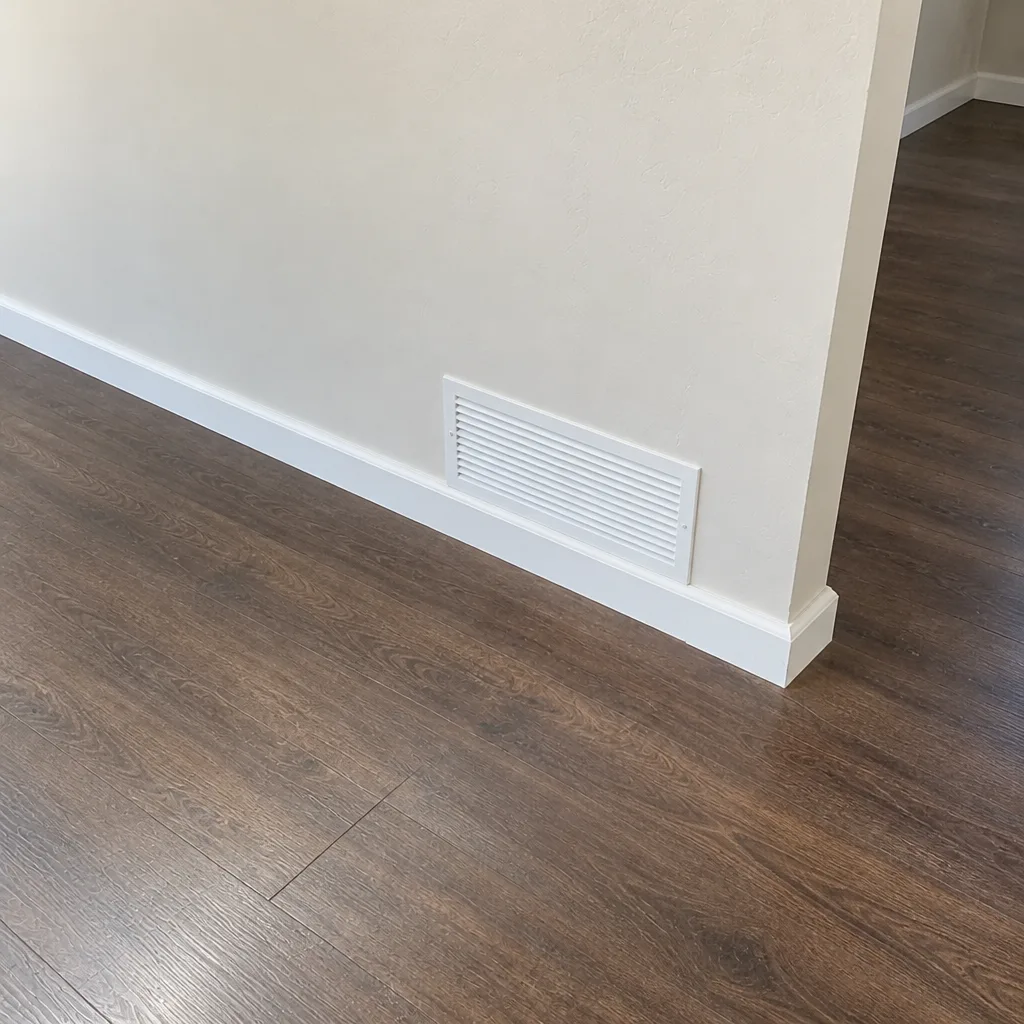 After
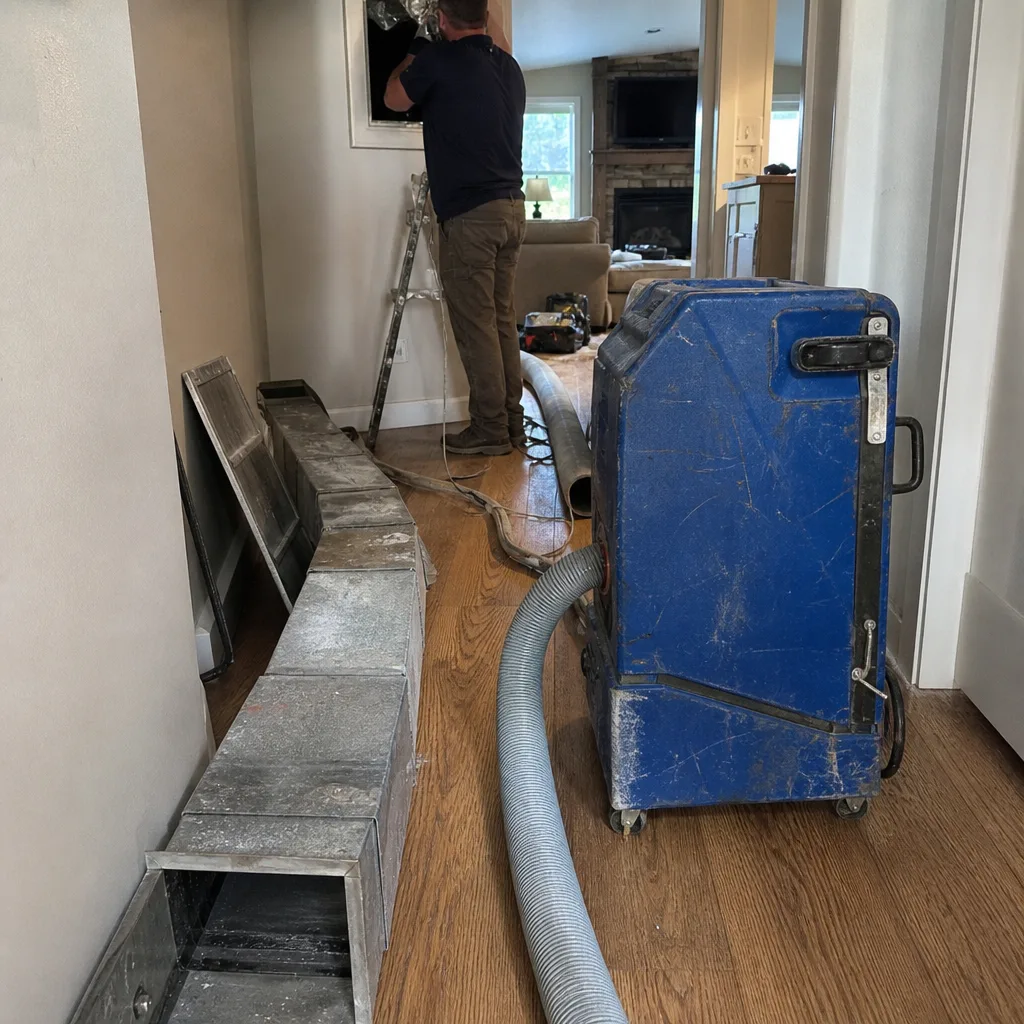 Before
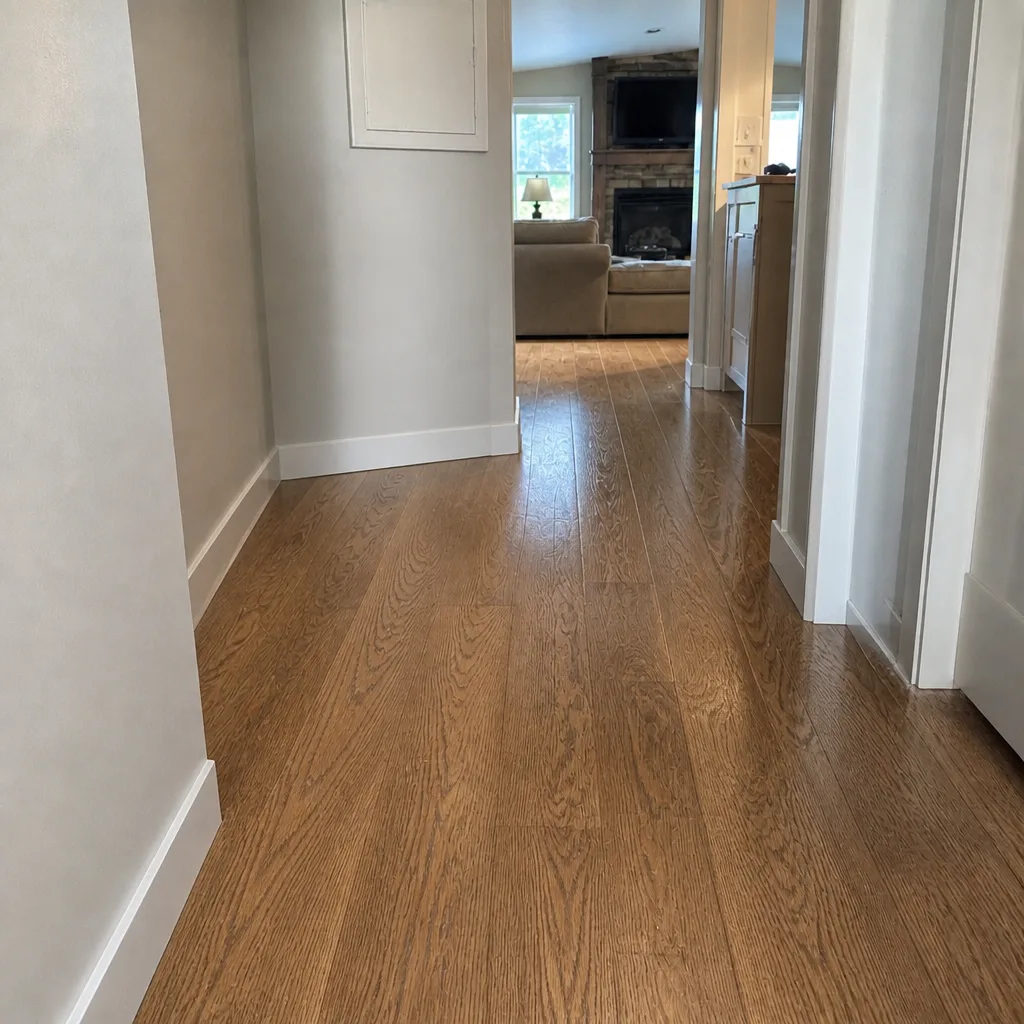 After
When to Call a Professional
Some signs call for an assessment sooner than others. Call when debris is visibly shedding from the registers, when a persistent musty odor is circulating through the house, when a recent remodel has left dust in the system, when pets or allergies suggest the ducts are loaded, or when the ducts have never been serviced at all. Also call if the dryer is taking longer to dry or the vent has never been cleared. Any of these conditions means a professional inspection will tell you something useful – and the estimate is free.
Lake Stevens Air Duct Cleaning offers free estimates in Lake Stevens – call (855) 726-7819. We answer 24/7. Fast dispatch from 7am to 7pm, Sunday through Friday. One flat price per system, agreed before work starts. Before-and-after photos of your own ducts. Work performed by the professional technician we connect you with – Lake Stevens Air Duct Cleaning connects you with the vetted local pro who is licensed and insured as the state requires, and quotes are set in writing per job.
Frequently Asked Questions
Air duct cleaning in Lake Stevens typically falls in the $400 to $900 range for a whole-home system, with the final price set by the written estimate after the technician inspects the layout, the number of registers, and the condition of the ductwork. Larger systems, crawl-space ductwork, and any repair or sealing work will push the price toward the upper end. Duct repair and sealing, if needed, is quoted separately. Call (855) 726-7819 for an exact quote; estimates are free.
Cheap quotes usually reflect a different service: contact vacuuming instead of source removal, shorter duration on site, no negative-air containment, and no camera verification. A low price that takes under an hour leaves debris in the system that a proper cleaning would have removed. The lower price is real – it’s the job that isn’t. Call (855) 726-7819 for a free estimate built on the actual work your system needs.
Ask before booking whether the contractor provides camera verification and before-and-after documentation of your own ducts. At the walkthrough, you should see the footage or photos at the same points in the system that were inspected during the assessment. If you don’t get that, the verification step was skipped. Call (855) 726-7819 to schedule a free estimate that includes clear documentation of what’s cleaned.
There’s no fixed schedule – most homes need cleaning when conditions call for it, not on a calendar. In Lake Stevens’ wet climate, homes with musty odors, allergy complaints, pets, recent remodels, or no prior duct service typically benefit from an assessment sooner. Dryer vents are on a tighter cadence because lint accumulates with every load. Call (855) 726-7819 for a free assessment; the technician will tell you honestly whether cleaning is warranted now.
Cleaning removes debris and any visible microbial growth, but a persistent musty smell usually means moisture is still entering the system – so cleaning alone doesn’t always resolve it. That’s why we offer air quality and sanitizing as a separate service, and why we inspect for moisture sources, disconnected returns, and gaps in sealing during the assessment. The full air pathway is what we address. Call (855) 726-7819 to schedule a free estimate.
Duct cleaning addresses the ducts themselves – the return and supply runs that carry air through the home. HVAC cleaning addresses the equipment: the blower wheel, evaporator coil, and drain pan where dust collects immediately downstream of the return. A clean system requires both, because dusty components recontaminate clean ducts. Our air duct cleaning service handles the ductwork; HVAC cleaning handles the equipment. Call (855) 726-7819 to schedule both in one visit.
The Bottom Line
A proper air duct cleaning in Lake Stevens is a technical job that follows a real standard: assessment, source removal, cleaning of the full air pathway, verification, and restoration where needed. It takes hours, not minutes, and it uses professional-grade equipment – rotary brush systems, negative-air containment, and containment filtration – not shop vacs and good intentions. Wet climate, home age, and construction type all affect what a technician should inspect first. Camera verification is what separates a documented cleaning from a verbal one. Duct repair and sealing is what keeps a cleaned system clean. And the written estimate – one flat price per system – is what protects you from a low quote that becomes a bigger invoice after work starts. If you want an honest, technically grounded assessment of your ducts, HVAC, and dryer vent, we’re glad to help. Our technicians have up to 10 years of experience, and we’ll show you exactly what we find.
Call (855) 726-7819 for a free estimate. We answer 24/7. Fast dispatch from 7am to 7pm, Sunday through Friday. One flat price per system, agreed before work starts. Before-and-after photos of your own ducts. Work performed by the licensed, insured local professional we connect you with.
Written by the team at Lake Stevens Air Duct Cleaning.