
Last updated November 25, 2026
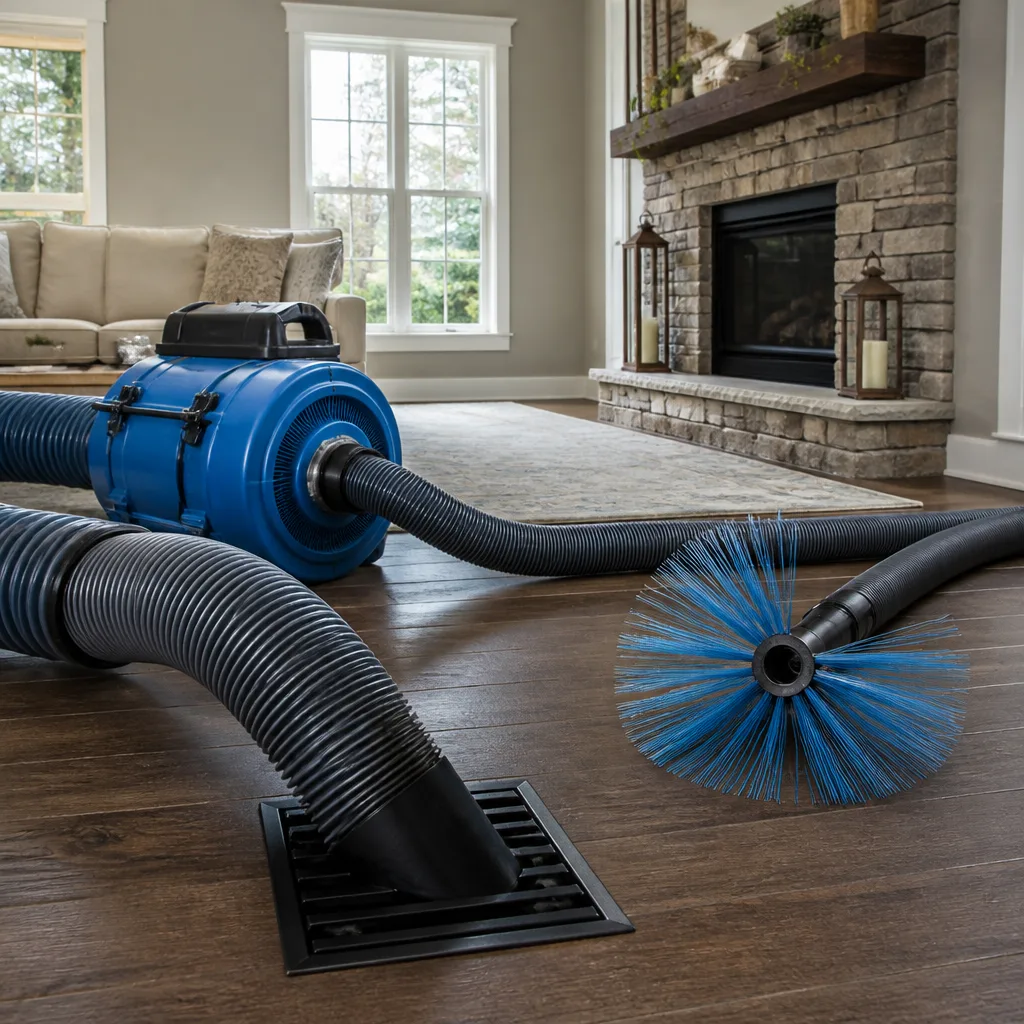 Whole-home duct cleaning
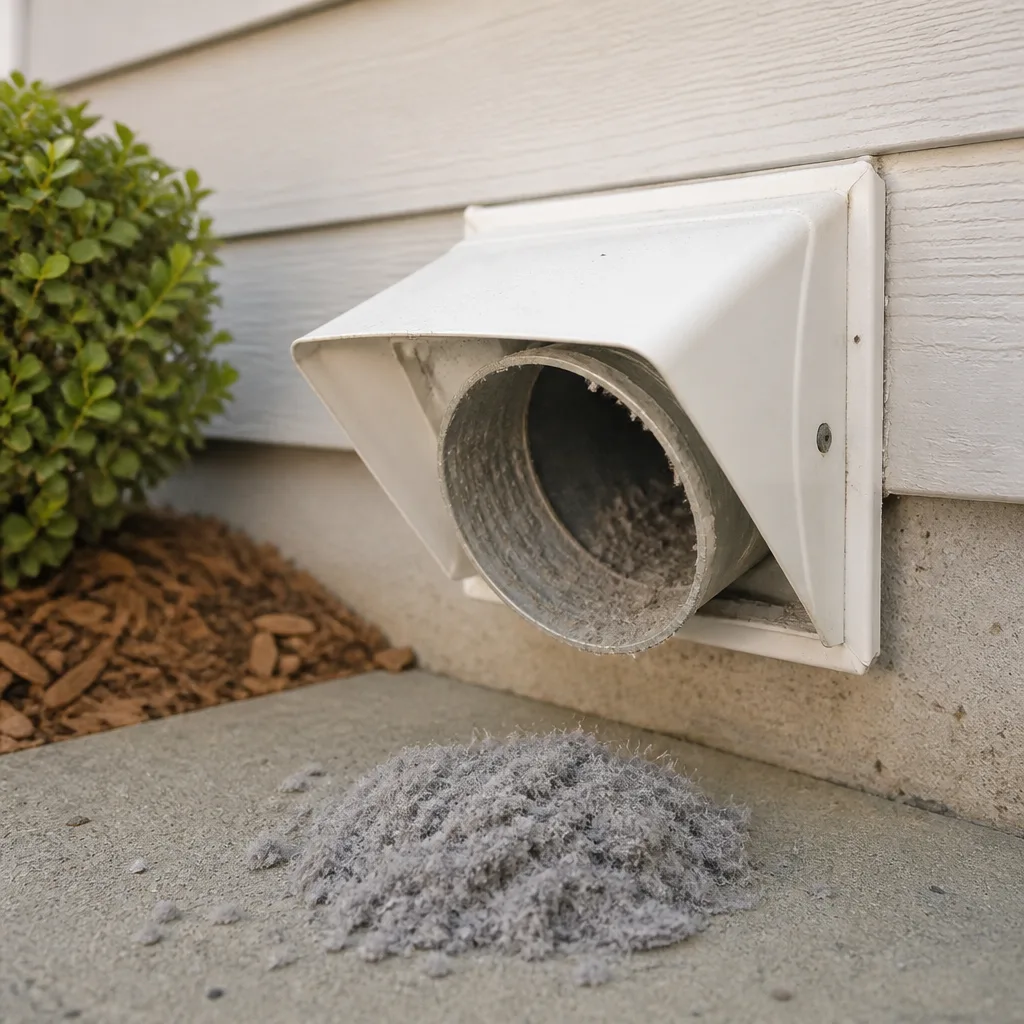 Dryer vent cleaning
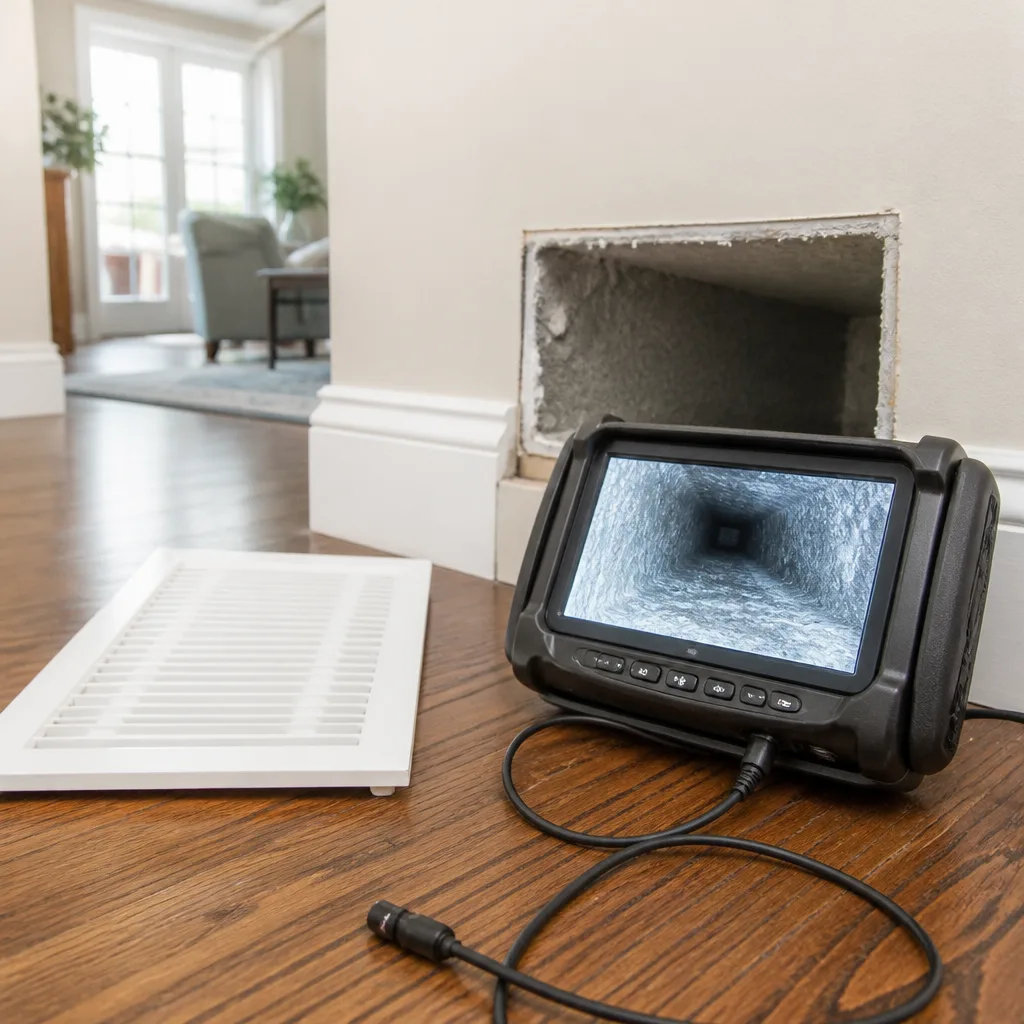 Camera inspection
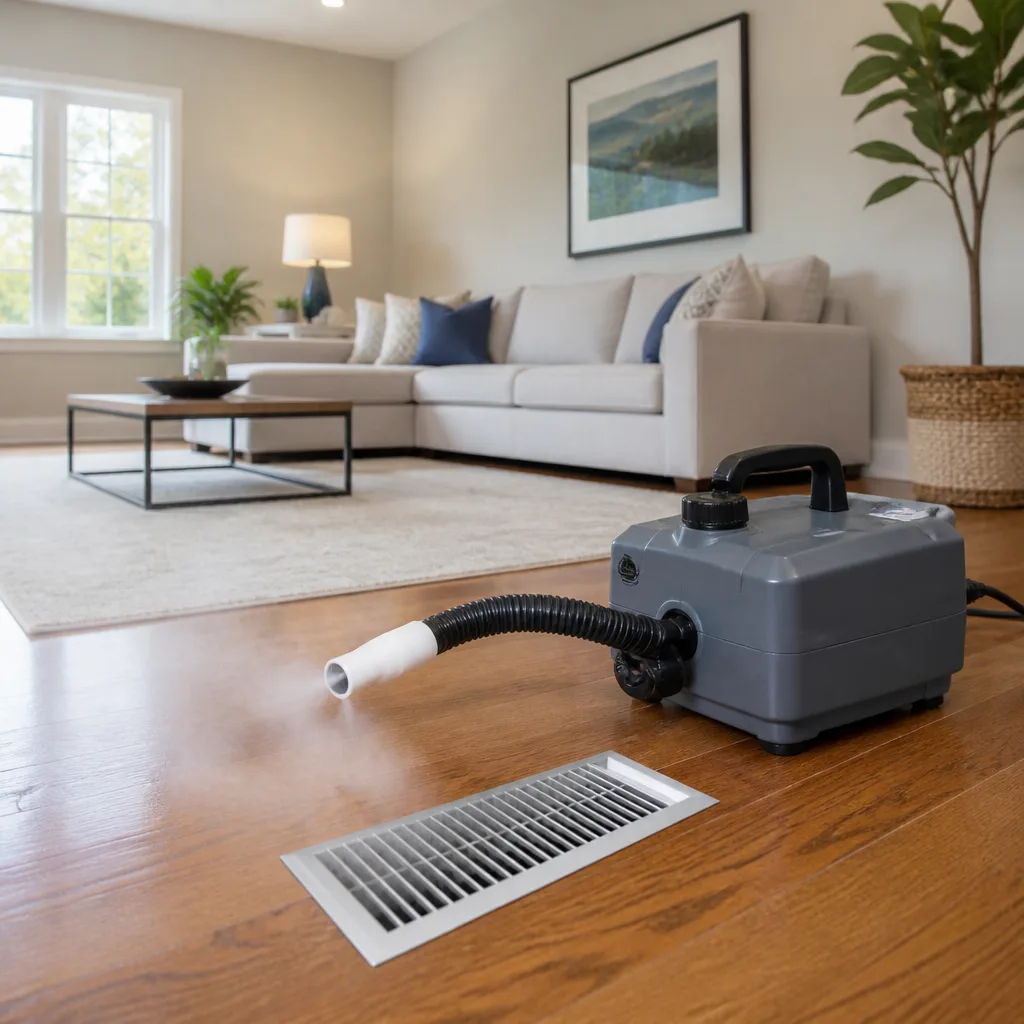 Sanitizing & deodorizing
Whole-system duct and dryer vent check with before-and-after photos - you see exactly what came out of your vents
That "$99 whole-house special" is a bait ad - the real number appears once they are in your hallway, or the "clean" is a shop-vac at the register. We photograph the inside of your ducts before and after instead.
Air Duct Cleaning Permits, Codes & Inspections in Lake Stevens, WA: What You Need to Know
Here’s the part most homeowners don’t hear until it’s too late: the cleaning itself usually needs no permit, but the repair that follows it often does. A technician finds a crushed flex run behind a register, cuts out the bad section, tapes in a replacement, and moves on. No paperwork, no record, no inspection. That’s an unrecorded modification to your HVAC system sitting inside a wall, and it can surface years later during a home sale inspection or an insurance review. In this guide, we’ll walk through where Washington’s mechanical code actually draws the line between maintenance and alteration, how Snohomish County handles it, what duct sealing methods change the permit picture, and what you should ask for in writing after any duct work in Lake Stevens.
Quick Answer
In Washington State, routine air duct cleaning is maintenance and does not require a permit. Permits enter the picture when the work becomes a mechanical alteration, such as cutting in new duct runs, relocating or resizing ducts, replacing major components, or installing aerosol sealant systems. Snohomish County reviews those alteration-level projects through its building department. Duct cleaning on its own is not a permitted activity, and no inspection is triggered by cleaning alone.
Styles & brands we work with
- Whole-home duct cleaning
- Dryer vent cleaning
- Camera inspection
- Sanitizing & deodorizing
Table of Contents
- Do You Need a Permit for Air Duct Cleaning in Washington State?
- Maintenance vs. Alteration: Where the Code Draws the Line
- Snohomish County’s Role in HVAC Modifications
- Duct Sealing Methods and How They Affect Permits
- What to Request in Writing After Duct Repairs
- What Inspections Actually Cover
- HOA Considerations in Lake Stevens Neighborhoods
- Why Lake Stevens Homes See Duct Problems
Do You Need a Permit for Air Duct Cleaning in Washington State?
No. Air duct cleaning in Washington State is classified as maintenance, and maintenance does not require a building permit. A cleaning company arriving at your Lake Stevens home to remove debris, dust, and biological buildup from the duct system is doing routine service work, not construction. There is no plan review, no inspection, and no paperwork filed with the county.
The confusion starts because cleaning is often bundled with other work. When a technician opens up the system and finds something structurally wrong, the visit can shift from maintenance to repair. And repair sometimes crosses into the alteration category, which is where codes and permits live.
A few general points worth holding onto:
- Cleaning alone: no permit, no inspection.
- Repairing a duct connection with mastic or approved tape: usually treated as maintenance, but documentation still matters.
- Cutting in a new run, changing duct size, or modifying the system layout: typically an alteration requiring a permit.
- Replacing a major component in the air distribution system: usually a permit-level job.
We always recommend verifying the current requirements with Snohomish County directly before any work that touches the system’s structure, because requirements and interpretations can shift, and the responsibility ultimately sits with the property owner. What we can tell you from experience is that the difference between a clean-and-go visit and a permitted modification is significant, and it’s worth knowing which one you’re getting. If you just want to know what a standard cleaning involves, start with our page on air duct cleaning.
Maintenance vs. Alteration: Where the Code Draws the Line
Washington’s mechanical code treats duct systems as part of the mechanical system, and the language that matters is the distinction between maintaining that system and altering it. Maintenance keeps the system working as designed. Alteration changes what was designed.
In practical terms, here’s how we’d categorize the work we see in Lake Stevens:
Maintenance-level work
- Removing debris, dust, and buildup from ducts and registers
- Re-securing a loose connection or register boot
- Sealing minor gaps at joints with mastic or approved foil tape
- Cleaning the air handler and coil surfaces as part of HVAC cleaning
Alteration-level work
- Adding a new supply or return run to serve a room
- Resizing or relocating an existing duct
- Replacing a section of duct with a different material or configuration
- Installing an aerosol sealant system that coats the interior of the ducts
The line is not always bright. A badly crushed flex run behind a refrigerator cabinet might be repaired with new flex of the same size in the same location, which many interpret as repair and maintenance. The same run rerouted to a different location is an alteration. Reasonable people can disagree at the edges, and that’s exactly why you want the work documented and, when in doubt, confirmed with the county.
The reason this matters for a homeowner in Lake Stevens is that the permit question ties into resale, insurance, and warranty. A home inspection will often note any evidence of HVAC modification. If there’s no record of who did it or what was done, the buyer’s inspector flags it, and you’re the one answering questions.
Snohomish County’s Role in HVAC Modifications
Lake Stevens sits within Snohomish County, and the county building department has jurisdiction over mechanical permits for HVAC work that crosses into alteration territory. That means permits, plan review where required, and inspections happen at the county level, not the city.
The process for a permit-required HVAC modification generally looks like this:
- Scope the work. Determine whether the project is a maintenance repair or a true alteration. This is the step most people skip, and it’s the one that determines everything else.
- Apply for the permit. The contractor or the homeowner files a mechanical permit application with Snohomish County for the alteration.
- Complete the work. Ducts are installed or modified in accordance with the approved scope and the mechanical code.
- Request inspection. The county inspects the installation before the system is closed up or put back into service, where inspection is required.
- Keep the record. The permit and inspection record belong with the property, not lost in a drawer.
We can’t overstate how much smoother this goes when the contractor carries the ball. A qualified local pro should know when a permit is required, be able to pull it, and hand you a closing record when the job is done. That’s part of the reason we recommend asking a contractor directly, before work starts, whether they intend to pull a permit and why or why not. The local pro we connect you with is licensed and insured as their state requires, and pulling permits where they’re needed is a normal part of the scope.
One more point specific to Lake Stevens: a lot of the housing here is newer construction and tract-built, with systems installed to a single plan. That makes any later modification more visible on a comparison basis, because a subsequent owner with the same floor plan can see immediately that a duct layout isn’t the original.
Duct Sealing Methods and How They Affect Permits
Here’s a distinction most homeowners never hear: not all duct sealing is the same, and the method changes the permit picture entirely. This is one of the most commonly missed points in the whole conversation about air duct cleaning permits and codes in Washington State.
Manual sealing: mastic and metal tape
Mastic is a brush-on or troweled sealant applied to the outside of joints and seams. Approved foil tape is a pressure-sensitive tape applied to the seams of rigid duct. Both are done from outside the duct, by hand, on connections and joints. This type of sealing is generally treated as maintenance-level work, because it doesn’t change the system’s design or capacity. It closes gaps the system was never meant to have open.
From a practical standpoint, this is the sealing we do most often as part of duct repair. It’s also visible and verifiable: a homeowner can look at a sealed joint and see the seal.
Aerosol sealant systems
Aerosol sealant systems work differently. A device is connected to the duct system, and a fine sealant mist is circulated through the ducts to coat the interior and close small leaks from the inside. This is a distinct service class. Because it’s applied across the whole system and changes the interior surface, it’s more likely to be treated as an alteration, and permit requirements can depend on how the system is configured and what’s being sealed. We don’t install aerosol systems, and we don’t want to misrepresent them. Our sealing work is hands-on: mastic, approved tape, and physical repair of the joints and runs we can see and reach.
When a duct system has real leaks, sealing is often the difference between clean air and clean ducts that are leaking it back into the attic. You can read more about our approach on duct repair and sealing, and about the dryer-vent side of the story on dryer vent cleaning.
What to Request in Writing After Duct Repairs
Even for work that’s clearly maintenance-level, you should walk away with a written record. This is the piece most homeowners skip, and it’s the piece that protects you if questions come up years later during a sale, an insurance review, or a warranty claim.
Here’s what to ask for after any duct repair work in Lake Stevens, whether a permit was pulled or not:
- A written description of what was found. What was damaged, where it was located, and what caused it in the technician’s assessment.
- A written description of what was changed. This is the key one. Not “repaired duct,” but which run, what material, what size, what sealing method was used.
- Before-and-after photos of their own ducts. We provide these as part of our normal reporting, and we think every company should. If a company can’t show you the duct they repaired, don’t accept the invoice until they do.
- Material or product documentation. If a component was installed, ask for the model and brand. We work with products from Aprilaire and Honeywell for air quality components, and installed components come with documentation.
- Permit and inspection records, if applicable. If a permit was pulled, get the permit number and the inspection record.
- The sealing method used. Mastic, approved tape, or another method, written down.
This documentation isn’t bureaucracy. It’s the difference between a modification you can produce a paper trail for and one you can’t. A home inspector examining a Lake Stevens house who sees fresh duct work will ask for that trail. If it doesn’t exist, you answer the question instead.
What Inspections Actually Cover
A mechanical inspection triggered by a permitted HVAC alteration is not the same as a duct cleaning verification. It’s a construction inspection, and it’s about code compliance: that the ducts were installed or modified as approved, that materials are appropriate, and that the system is safe.
What a mechanical inspection is checking:
- That the duct work matches the approved scope and the applicable code
- That materials and connections are appropriate for the application
- That the system’s structural integrity is intact where it was altered
What a mechanical inspection is not checking:
- Whether the ducts are clean
- Whether debris was removed
- Whether biological contaminants were addressed
That last group is where we come in. Verification of cleaning isn’t an inspection in the code sense, it’s a service deliverable. We use professional-grade equipment from brands like Rotobrush and Abatement Technologies, and we document the before-and-after condition of the system we worked on. That’s a different artifact than a county inspection record, and homeowners often conflate the two. If your cleaning produced a written report from the company and no county paperwork, that means no permit was required, not that the cleaning didn’t happen.
One useful rule of thumb: if the county inspected the job, you get a county document with a permit number. If not, you get a service report from the company whose work it was. Every permitted job should have both. Every unpermitted cleaning should at least have the service report.
HOA Considerations in Lake Stevens Neighborhoods
Lake Stevens has a lot of platted neighborhoods with homeowners associations, and an HOA can create its own layer of rules about what a contractor is allowed to modify, separate from anything the county requires.
The typical HOA concerns for duct work and HVAC:
- Exterior penetrations and roof or wall modifications. Adding a new exterior vent, rerouting a roof termination, or changing the location of an exterior penetration can require HOA architectural review.
- Exterior equipment placement. If a project touches outdoor equipment, its placement may be governed by the HOA’s rules, not just the county’s.
- Architectural review requirements. Some associations require advance approval before certain modifications, even those that would be permitted by the county.
- Contractor insurance and documentation requirements. Some HOAs require proof of insurance or a written scope before work begins.
The important thing to understand is that an HOA can’t override the county’s code requirements, and the county can’t override the HOA’s private covenants. Both can apply. A duct modification that requires an exterior penetration can require county permitting and HOA review at the same time, and those are separate processes with separate paperwork.
When we work in a Lake Stevens neighborhood where the HOA has requirements, we want to know about them before the visit. It’s the homeowner’s task to check their own association’s rules, but it’s our task to scope work so it matches what the association allows. Our page on Lake Stevens Air Duct Cleaning goes over the full service list, and the team can work with you on timing when HOA review is part of the job. The same is true for HVAC cleaning if the project touches the equipment itself.
Why Lake Stevens Homes See Duct Problems
Lake Stevens weather does duct systems no favors. The area gets real wet winters with high humidity, cold stretches that run the furnace hard for months, and a climate that keeps the interior of a home in an almost constant cycle of heating and cooling-driven moisture movement. That cycle is hard on duct systems.
What we see in Lake Stevens homes most often:
- Condensation and biological growth. Damp air moving through an under-insulated or poorly sealed duct system creates the conditions for mold spores and biological growth. That matters more here than in a dry climate, and it’s the reason we treat sanitizing as a distinct service rather than something folded into cleaning.
- Sealant decay. The tape and sealant on duct joints degrades over heating and cooling cycles. A joint that was sealed ten years ago may not be sealed today.
- Flexible duct failures in crawl spaces and attics. The temperature and moisture swings in unconditioned spaces work on flex duct runs, and crushed, sagging, or disconnected sections are common.
- Debris and allergen accumulation. The wet-season-to-dry-season cycle here kicks up debris that settles into returns and registers, which then gets pulled through the system every time the furnace runs.
This is the context behind our recommendation that a Lake Stevens homeowner think of cleaning and system integrity as two sides of the same job. Cleaning the ducts without sealing the leaks that let dirty attic air back in isn’t a complete solution. Sealing leaks without cleaning first seals in the problem. The two services together are what move the needle on air quality. Our page on air quality and sanitizing covers how we approach biological contaminants specifically, and duct repair and sealing covers the structural side. We also work with Guardsman products for air quality components where they fit the system.
Common Mistakes to Avoid
- Assuming all duct cleaning requires a permit. It doesn’t. Cleaning is maintenance and doesn’t trigger a permit or an inspection. The mistake is over-thinking the cleaning and under-thinking the repair that follows it.
- Letting a repair happen without written documentation. If a technician repairs a crushed duct section on the spot and doesn’t document it, you have an unrecorded modification. Ask for a written description, before-and-after photos, and the sealing method used, even for maintenance-level work.
- Confusing aerosol sealant with mastic sealing. They’re different services with different permit implications. Mastic and approved tape are applied by hand to the outside of joints. Aerosol systems coat the interior of the whole system. Ask which one is being proposed and why.
- Skipping the HOA review in Lake Stevens neighborhoods. If the work touches an exterior penetration or modifies equipment placement, the HOA may have its own approval process separate from the county. County approval doesn’t satisfy an HOA covenant, and vice versa.
- Ignoring the why behind duct damage. A repaired duct in a Lake Stevens crawl space will fail again if the moisture and temperature problem that caused it isn’t addressed. Sealing and repair without looking at the source is a temporary fix.
- Hiring a cleaning-only company for repair-level work. Plenty of companies clean ducts and stop there. If the visit uncovers structural problems, make sure the company you hire can actually repair and seal, not just refer you elsewhere.
- Overlooking the dryer vent. dryer vent cleaning is a separate service with its own safety profile. A clogged dryer vent is a genuine fire hazard, and it’s not something to defer while you sort out the duct paperwork.
See the difference
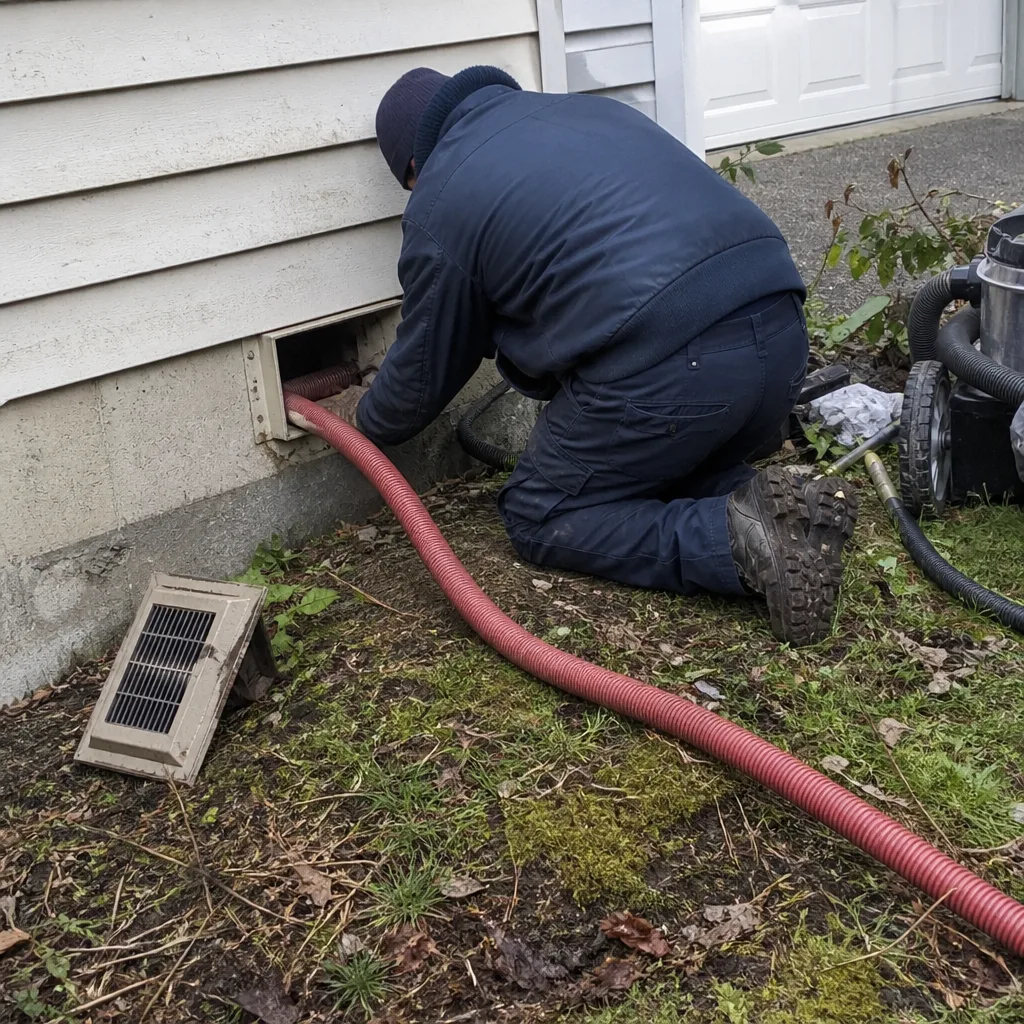 Before
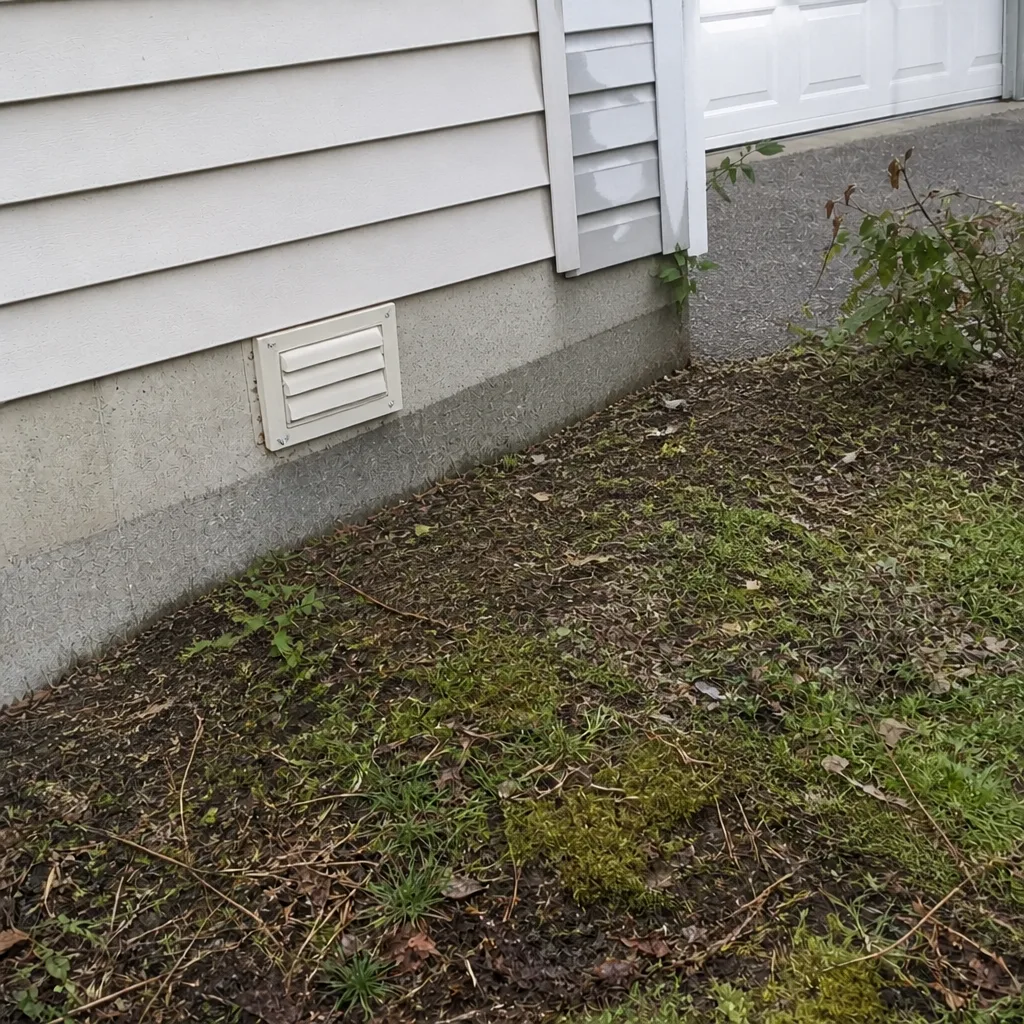 After
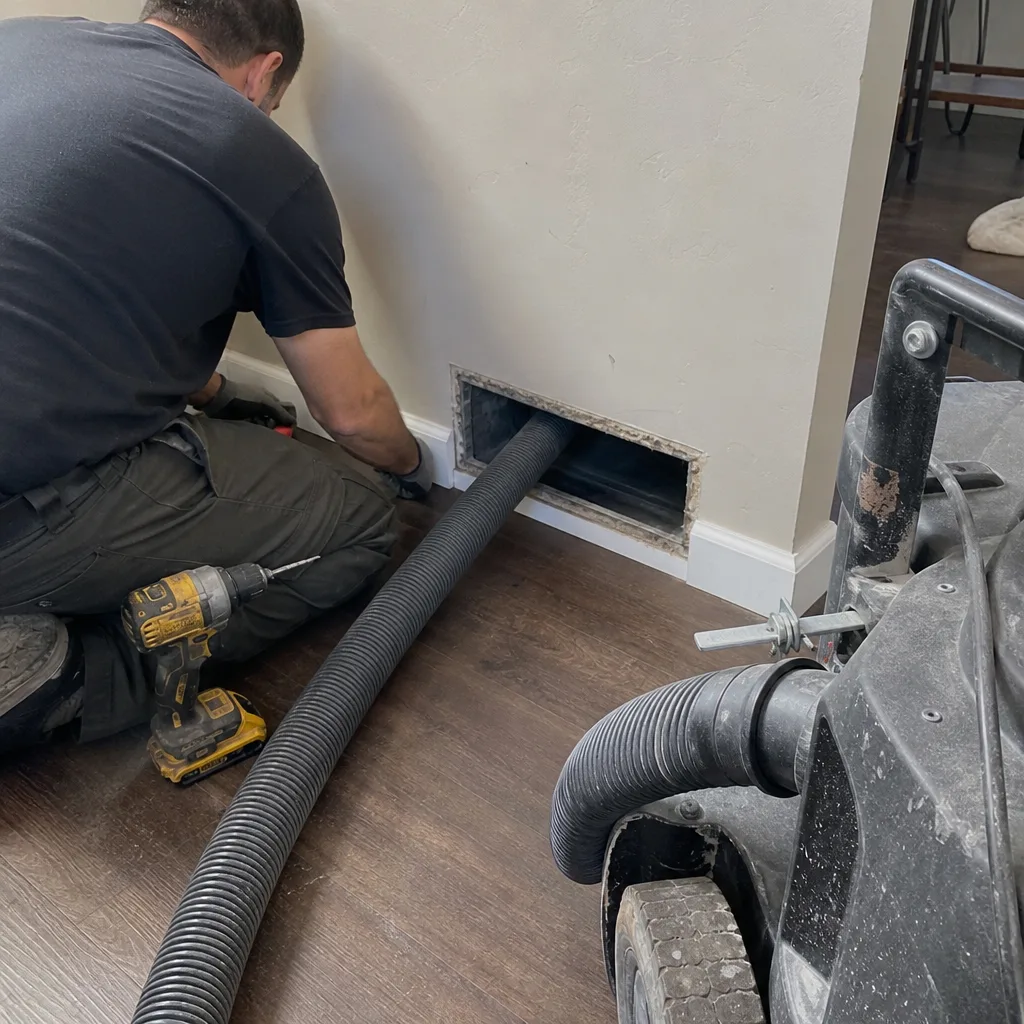 Before
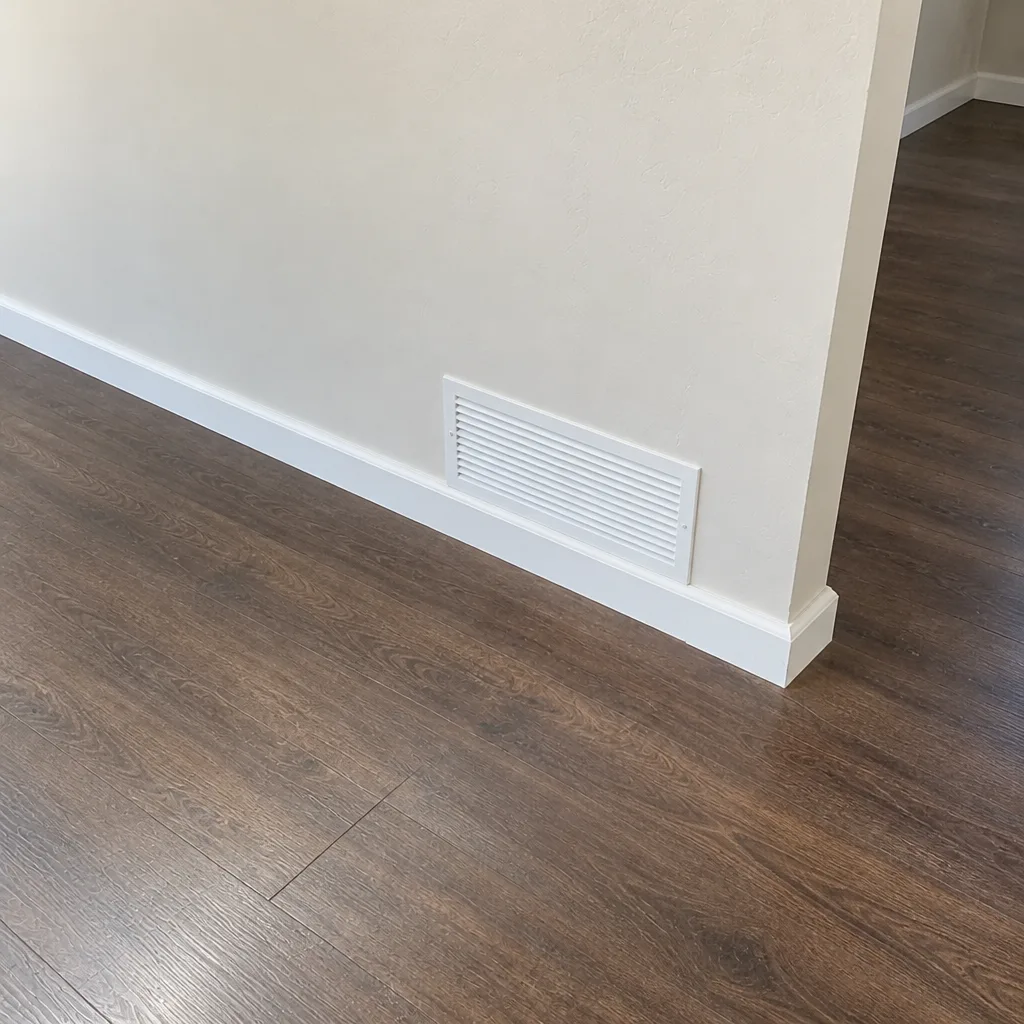 After
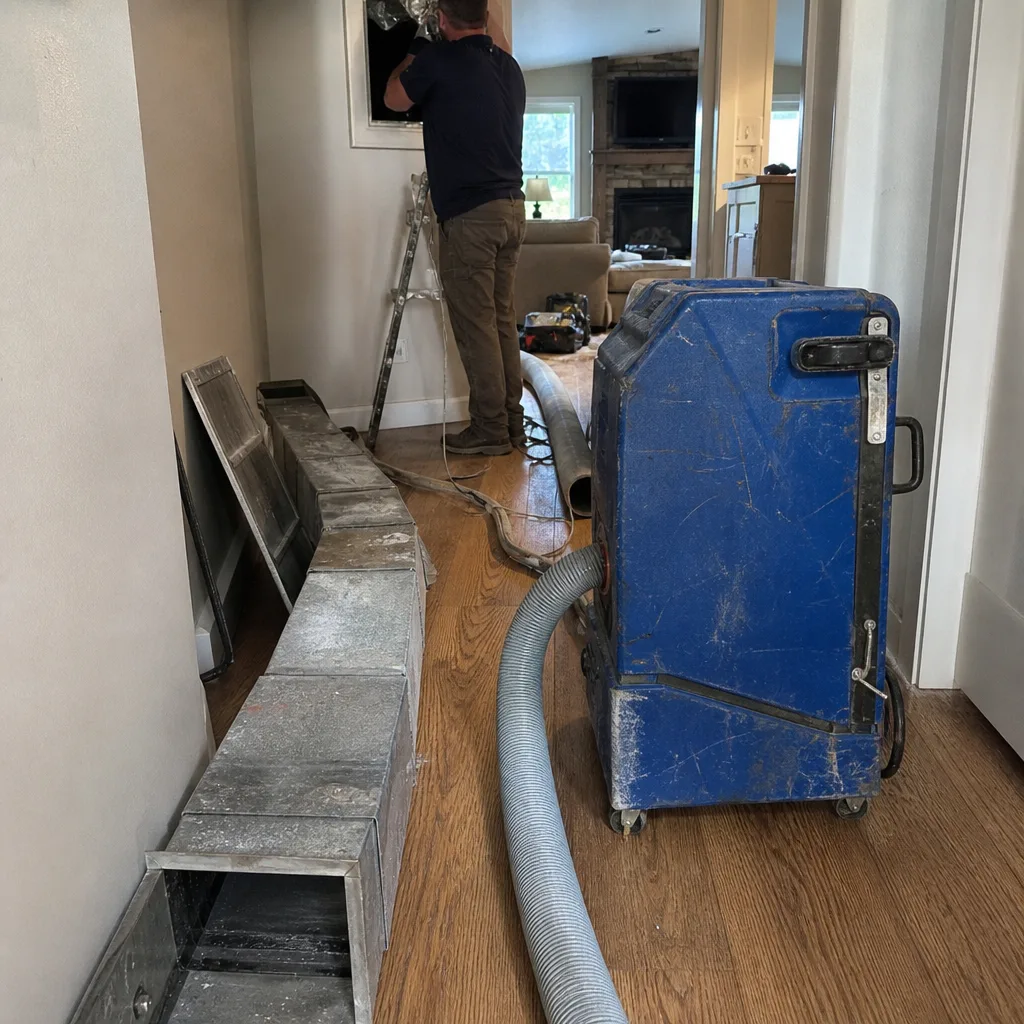 Before
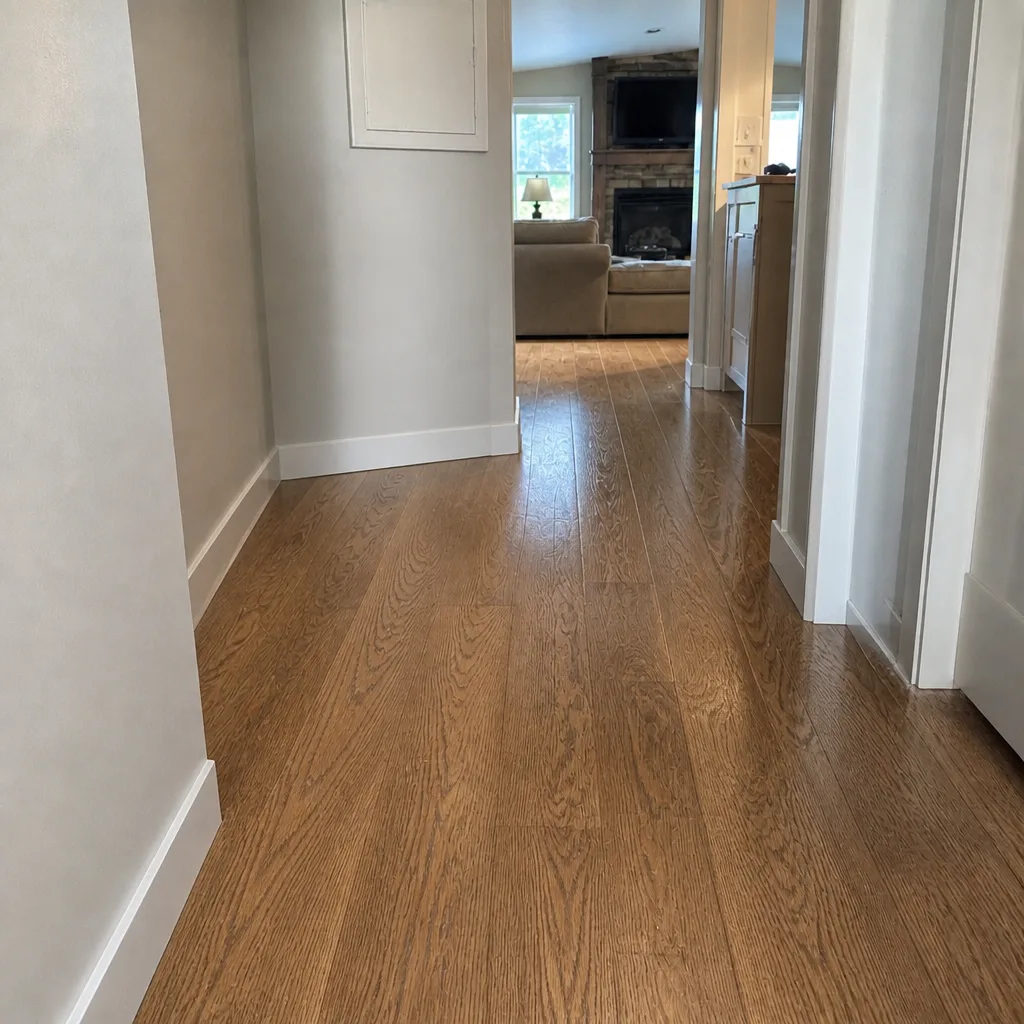 After
When to Call a Professional
Call a professional when you’re seeing signs that the problem has moved from “needs cleaning” to “needs a trained eye.” Musty odors from the vents, visible dust or debris blowing out of registers when the furnace kicks on, allergy symptoms that get worse inside the house, unexplained humidity in a Lake Stevens crawl space, or just a system that’s never been serviced. Call a professional before any duct modification, so the repair meets code, and call before a home sale so you have documentation in hand. Lake Stevens Air Duct Cleaning offers free estimates in Lake Stevens. Call (855) 726-7819. The local pro is licensed and insured as their state requires, and you’ll get one flat price per system agreed before work starts, with before-and-after photos of your own ducts.
Frequently Asked Questions
No. Air duct cleaning is maintenance work in Washington State and does not require a building permit, plan review, or inspection. Permits become relevant only when the work crosses into an alteration, such as adding new duct runs, changing duct size or location, or installing an aerosol sealant system. Call (855) 726-7819 for an exact quote on your cleaning – estimates are free and we answer 24/7.
It depends on whether the work is a repair or an alteration. Re-securing a loose connection or applying mastic to a joint is typically maintenance-level. Cutting in a new run, changing duct size, or relocating a duct is typically an alteration requiring a permit from Snohomish County’s building department. Ask the contractor to explain in writing which category their work falls into, and confirm with the county before work starts. Call (855) 726-7819 and we’ll walk you through what we see in your system.
Yes. Mastic and approved foil tape are applied by hand to the outside of joints and seams, and the work is generally treated as maintenance-level. Aerosol sealant systems coat the interior of the whole duct system and are more likely to be treated as an alteration with permit implications. Our sealing work is hands-on mastic, approved tape, and physical repair, and we document the method used. Call (855) 726-7819 for a free estimate.
Ask for a written description of what was found, what was changed, which run was affected, the material and size used, the sealing method, the products installed, and before-and-after photos of your ducts. If a permit was pulled, ask for the permit number and inspection record. Even for maintenance-level work, the written record matters at resale. Call (855) 726-7819 – estimates are free.
Your HOA can set its own rules about modifications that touch exterior penetrations, equipment placement, or architectural review, and those rules can be more restrictive than the county’s code. HOA covenants and county code are separate layers, and both can apply to the same job. Check your association’s rules before work starts. Call (855) 726-7819 to discuss how we can scope work around HOA requirements.
You should see before-and-after photos of your own ducts, taken during the job. That’s a standard part of how we report, and we think every company should do it. If the company can’t show you the ducts they cleaned or repaired, ask them to. For permitted work, you should also have a county inspection record with a permit number. Call (855) 726-7819 with questions before you book.
Thin quotes often reflect a smaller scope than the one you’re picturing: a quick pass with a shop vacuum, no containment, no documentation, no before-and-after photos, and no follow-up if the inspection uncovers a repair. We price per job by written estimate and tell you exactly what’s included before we start, so the invoice matches the quote. Call (855) 726-7819 for a free estimate.
Cleaning comes first. Debris and biological matter need to come out before any sealing or repair, or the repair seals the problem in place. In a Lake Stevens home we typically scope cleaning as the first step and repair and sealing as the second, sometimes in the same visit. Call (855) 726-7819 – estimates are free.
The Bottom Line
Air duct cleaning in Washington State doesn’t require a permit. The work that frequently follows it, though, can cross into code territory, and most homeowners never learn the difference until a home inspection during a sale turns it into a problem. In Lake Stevens, Snohomish County handles the permit and inspection side for alteration-level HVAC work, and the HOA can add another layer. The practical takeaway is simple: for cleaning, no permit, but always ask for documentation. For any repair, ask which category the work falls into, get it in writing, and ask for before-and-after photos of the ducts. When you’re ready to scope the job, Lake Stevens Air Duct Cleaning offers free estimates in Lake Stevens – call (855) 726-7819. One flat price per system agreed before work starts, before-and-after photos of your own ducts, and a satisfaction guarantee.
Written by the team at Lake Stevens Air Duct Cleaning.